How to Create a Business Budget for Beginners: A Practical Step-by-Step Guide

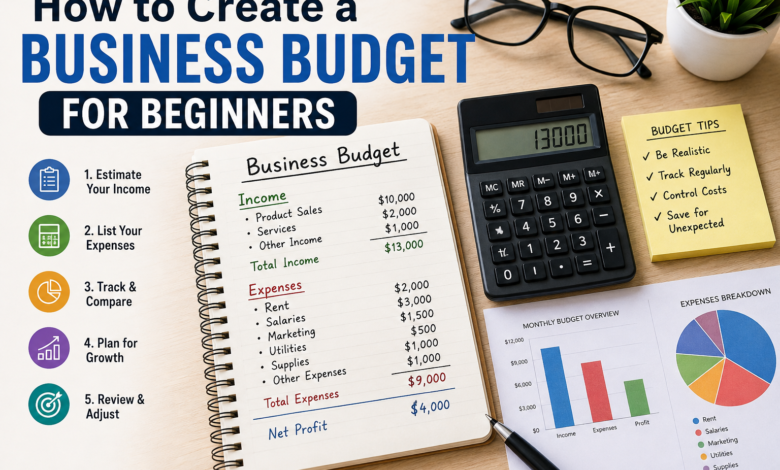
Creating a business budget may sound complicated when you are just starting out. You may have questions about how much money the business needs, which expenses to prioritize, and how much you can afford to spend.
A business budget provides a clear picture of where your money comes from and where it goes. It can help you make better spending decisions, prepare for upcoming costs, and avoid unnecessary financial pressure.
The good news is that you do not need advanced accounting knowledge to create a basic business budget. With a simple system and accurate records, beginners can build a useful budget and update it as the business grows.
2. What Is a Business Budget?
A business budget is a financial plan that estimates how much money a business expects to receive and spend during a specific period.
Most budgets include two main areas: expected income and expected expenses. Income may come from product sales, services, subscriptions, or other business activities. Expenses can include rent, supplies, marketing, software, salaries, transportation, and other operating costs.
A budget is not meant to predict the future perfectly. Instead, it gives you a practical financial target that you can compare with actual results.
3. Why Is a Business Budget Important?
A budget can help a business owner understand whether planned spending is realistic.
Without a budget, small purchases and recurring expenses can be difficult to monitor. A business may generate sales but still experience cash-flow problems if too much money is committed to expenses.
A well-maintained budget can help you:
- Control unnecessary spending
- Plan upcoming expenses
- Monitor business performance
- Prepare for slow periods
- Set realistic financial goals
- Make better purchasing decisions
- Understand available cash
- Identify areas where costs may be reduced
For beginners, budgeting also creates a financial habit that can become increasingly valuable as the business expands.
4. How to Create a Business Budget Step by Step
Step 1: Choose a Budget Period
First, decide how often you want to prepare your budget.
A monthly budget is often easy for beginners because most business expenses and income can be reviewed regularly. You can also create quarterly or annual projections based on your monthly figures.
The important thing is to choose a period that makes it easy to review your numbers consistently.
Step 2: Estimate Your Business Income
Next, estimate how much money the business expects to receive.
Review previous sales if your business is already operating. If you are starting a new business, use realistic assumptions rather than optimistic guesses.
Consider:
- Expected sales
- Service revenue
- Subscription income
- Seasonal changes
- Repeat customers
- Other legitimate sources of business income
It is useful to keep your estimates conservative, particularly when there is limited historical data.
Step 3: List Your Fixed Expenses
Fixed expenses are costs that generally remain relatively stable from month to month.
Examples may include:
- Office rent
- Business insurance
- Software subscriptions
- Loan payments
- Certain salaries
- Professional service fees
Listing these expenses separately makes it easier to understand the minimum amount of money the business needs to operate.
Step 4: List Your Variable Expenses
Variable expenses can change depending on business activity.
Examples include:
- Inventory
- Packaging
- Shipping
- Advertising
- Sales commissions
- Transaction fees
- Production materials
For some businesses, variable expenses increase as sales increase. Understanding this relationship can help you estimate the cost of generating additional revenue.
Step 5: Separate Essential and Non-Essential Costs
Not every expense has the same importance.
Separate costs into essential and non-essential categories. Essential expenses are those needed to keep the business operating. Non-essential expenses may improve convenience, branding, or growth but can potentially be reduced or delayed.
This distinction can become especially useful when revenue is lower than expected.
Step 6: Calculate Your Expected Profit
Once you have estimated income and expenses, compare the two.
A simple calculation is:
Expected Profit = Expected Revenue − Expected Expenses
For example, if a business expects $8,000 in revenue and $6,000 in expenses during a month, the projected operating profit would be $2,000 before considering any other applicable items.
This calculation gives you a basic understanding of whether your planned budget is sustainable.
Step 7: Include a Buffer for Unexpected Costs
Unexpected expenses are a normal part of running a business.
Equipment may need repairs, supplier prices may change, or an important expense may arise earlier than expected.
Instead of allocating every available dollar to planned spending, leave room in the budget for unexpected costs. The appropriate amount will depend on the type, size, and financial situation of the business.
Step 8: Compare the Budget With Actual Results
Creating a budget once is not enough.
At the end of each month, compare your estimated figures with what actually happened. Look for meaningful differences.
For example, if marketing expenses were significantly higher than expected, investigate why. If sales were lower than projected, determine whether the difference was temporary or part of a larger trend.
This process turns your budget into a management tool rather than simply a spreadsheet.
5. Common Business Budget Categories
A beginner-friendly budget can include categories such as:
| Category | Examples |
|---|---|
| Revenue | Product sales, services, subscriptions |
| Payroll | Wages, salaries, contractor payments |
| Marketing | Advertising, content, promotions |
| Operations | Rent, utilities, supplies |
| Technology | Software, hosting, equipment |
| Transportation | Delivery, fuel, business travel |
| Professional Services | Accounting, legal, consulting |
| Taxes | Applicable business taxes |
| Emergency Reserve | Unexpected business costs |
The categories should be adapted to the specific business rather than copied exactly.
6. Common Budgeting Mistakes Beginners Should Avoid
Overestimating Revenue
One of the biggest mistakes is assuming that every potential customer will make a purchase.
Use realistic sales expectations and adjust them as actual results become available.
Forgetting Small Recurring Expenses
Individual subscriptions or small service fees may seem insignificant, but recurring costs should still be recorded.
Review subscriptions regularly and cancel services that the business no longer needs.
Mixing Personal and Business Spending
Keeping personal and business finances separate makes financial records easier to understand.
Where appropriate, use dedicated business accounts and maintain clear records of business transactions.
Ignoring Seasonal Changes
Some businesses experience predictable periods of stronger or weaker demand.
A budget should account for these changes rather than assuming every month will perform the same way.
Failing to Update the Budget
Business conditions change. A budget created at the beginning of the year may become unrealistic later.
Review and update your assumptions when sales, prices, staffing, or operating costs change significantly.
7. Simple Tools for Managing a Business Budget
You can create a basic business budget using a spreadsheet or budgeting software.
A simple spreadsheet can contain columns for:
- Budgeted income
- Actual income
- Budgeted expenses
- Actual expenses
- Difference
- Notes
The best tool is one that you can maintain consistently. A complicated system is not useful if you rarely update it.
As the business becomes more complex, professional accounting or financial-management software may become more appropriate.
8. How Often Should You Review a Business Budget?
A monthly review is a practical starting point for many small businesses.
During the review, compare:
Budget → Actual Results → Difference → Reason → Action
For example, if utility costs were higher than expected, identify the reason and decide whether the difference requires a budget adjustment.
Regular reviews also make it easier to recognize financial trends before they become larger problems.
9. Tips for Creating a Better Business Budget
Keep your first budget simple. You can add more detailed categories later.
Use realistic estimates instead of numbers designed to make the business appear more profitable.
Track recurring expenses carefully and review them periodically.
Separate fixed and variable costs so you understand which expenses are more flexible.
Set specific financial goals, such as maintaining sufficient operating cash or controlling a particular expense category.
Most importantly, use your budget when making business decisions. A budget should influence spending, hiring, purchasing, and growth plans rather than simply being a document that sits unused.
(FAQs)
What is the easiest way to create a business budget?
Start by estimating monthly income and listing fixed and variable expenses. Then compare expected income with expected spending and review the results regularly.
Do small businesses really need a budget?
Yes. A budget can help even a very small business understand its financial position, plan expenses, and make more informed decisions.
Should a business budget include taxes?
Businesses should account for applicable tax obligations when planning their finances. The exact treatment depends on the business structure and location, so professional tax advice may be appropriate.
Can I create a business budget in Excel or Google Sheets?
Yes. A spreadsheet can be sufficient for a simple budget, particularly when the business has a limited number of transactions.
How far ahead should a beginner plan?
A monthly budget can provide a manageable starting point. You can also create longer-term projections once you have more reliable financial information.
What should I do if actual expenses are higher than my budget?
Identify which expenses caused the difference, determine whether the increase is temporary or ongoing, and adjust future spending or budget estimates accordingly.
How can I reduce business expenses?
Review recurring subscriptions, supplier costs, unnecessary purchases, and other discretionary expenses. Focus on reducing costs without damaging essential operations or customer service.
11. Conclusion
Creating a business budget does not have to be complicated. The basic process is to estimate income, identify expenses, separate fixed and variable costs, calculate expected results, and regularly compare your budget with actual performance.
For beginners, consistency is more important than creating a perfect financial model. As you collect more business data, your estimates can become more accurate.
A simple, regularly updated budget can give business owners greater control over spending and provide a clearer foundation for making financial decisions and planning future growth.