Choosing the right business is one of the most important decisions an entrepreneur can make. A good business idea can create income, independence, and long-term growth. But the wrong choice can waste time, money, and energy.
The challenge is that there is no single business that is perfect for everyone. A business that works well for one person may be a poor fit for another. Your skills, budget, interests, available time, location, customers, and goals all matter.
That is why choosing a business should involve more than simply following a popular trend. Before investing money, you need to understand what you can offer, who will buy it, how much it may cost to operate, and whether there is a realistic opportunity to grow.
This guide explains how to choose the right business step by step. Whether you are considering an online business, a home-based business, freelancing, retail, or a service company, these principles can help you make a more informed decision.
What Is Choosing the Right Business?
Choosing the right business means finding an opportunity that matches your abilities, resources, goals, and the needs of a specific market.
It does not necessarily mean finding the business with the highest possible profit. A business may have strong earning potential but still be unsuitable if it requires skills you do not have, more capital than you can afford, or a lifestyle you do not want.
For example, someone with strong writing skills and a limited budget might consider freelance writing, content creation, or a niche website. Someone who enjoys working with people and has experience in a particular trade might consider a local service business.
The key is finding the connection between what you can do, what customers need, and what they are willing to pay for.
Why Choosing the Right Business Matters
Starting a business requires more than enthusiasm. It often requires consistent work, financial planning, customer service, marketing, and the ability to deal with setbacks.
A business that matches your strengths can make these responsibilities easier to manage. You are more likely to understand your customers, improve your service, and stay motivated when difficulties appear.
The decision also affects your financial risk. A business requiring a large physical location, expensive equipment, or significant inventory may need considerably more capital than a small service business.
For beginners, starting with an idea that can be tested on a smaller scale can be a sensible approach. You can learn from real customers before committing to a larger investment.
Start With Your Skills and Experience
The first question should not be, “What business is trending?”
Instead, ask yourself, “What can I actually do well?”
Make a simple list of your skills, knowledge, education, work experience, hobbies, and interests. Think about problems you have solved before and tasks people often ask you to help with.
Your existing skills can give you an advantage because you may need less time and money to learn the basics.
For example, a person who understands graphic design could offer logo design or social media graphics. Someone who knows how to repair computers might provide technical support. A person with teaching experience could explore tutoring or educational services.
You do not have to build a business around your current profession, but your existing knowledge can provide a useful starting point.
Evaluate Your Budget
Money is another major factor when choosing a business.
Before selecting an idea, calculate how much you can realistically invest without putting your essential finances at risk. Consider both startup costs and ongoing expenses.
Startup costs might include equipment, software, inventory, licenses, branding, packaging, a website, or marketing. Ongoing costs could include rent, internet, employee payments, transportation, advertising, and supplies.
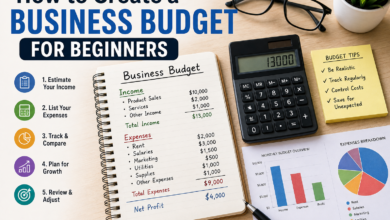
A simple business budget can reveal whether an idea is realistic.
For example, if you have a small starting budget, a service-based or online business may be easier to test than a business that requires a physical store and large inventory.
The goal is not always to spend as little as possible. The goal is to understand what you are spending and why.
Study the Market Before You Start
A promising idea is not enough. You also need customers.
Market research helps you understand who your potential customers are, what they need, what alternatives they already use, and how businesses in the same industry operate.
Start by defining your target customer.
Ask questions such as:
- Who would buy this product or service?
- What problem does it solve?
- How are customers solving that problem now?
- What do existing businesses offer?
- What could I do differently or better?
- Is the customer problem serious enough for people to pay for a solution?
You do not need an expensive research project to begin. You can study competitors, read customer reviews, examine online discussions, talk to potential customers, and test a small offer.
The purpose is to replace assumptions with evidence.
Look for a Real Customer Problem
Strong businesses often solve a problem.
The problem does not have to be dramatic. It could be something as simple as saving customers time, making a task easier, providing convenience, improving quality, or helping them learn a skill.
Suppose you are considering a home-based food business. Instead of simply thinking, “People like food,” consider a more specific opportunity. Perhaps busy families in your area want convenient homemade meals but have limited time to prepare them.
That is a clearer customer problem.
The more clearly you understand the problem, the easier it becomes to create an offer that customers can understand.
Consider Online Business Opportunities
An online business can be attractive because some models can be started with relatively limited physical infrastructure.
Possible options include freelance services, online tutoring, digital products, content websites, e-commerce, consulting, and creative services.
However, “online” does not automatically mean easy or profitable.
Online businesses still require valuable skills, customer research, marketing, reliable service, and patience. Competition can also be intense.
If you choose an online business, focus on a specific audience rather than trying to serve everyone.
For instance, instead of offering general graphic design to anyone, you might specialize in social media graphics for small restaurants. A narrower focus can make it easier to explain your service and find potential customers.
Consider a Home-Based Business
A home-based business can be suitable for people who want to keep overhead relatively manageable.
Depending on local rules and the type of business, possibilities may include freelancing, tutoring, handmade products, digital services, consulting, baking, content creation, or online selling.
Before starting, check any local requirements that apply to your business. Some industries may require registrations, permits, safety standards, or other approvals.
Working from home also requires discipline. Separating work time from personal time can become difficult if you do not create a clear routine.
Compare Business Models
Not all businesses make money in the same way.
A service business typically earns by providing a service directly to customers. An e-commerce business may earn through product sales. A subscription model charges customers regularly for continued access to a product or service.
Understanding the business model helps you estimate how the company could generate revenue.
Ask yourself:
Who pays me? What are they paying for? How often might they buy? What does it cost me to deliver the offer?
These basic questions can reveal whether your idea has a workable financial structure.
Key Benefits of Choosing the Right Business
The right business can provide several advantages.
Better Use of Your Skills
When your business matches your abilities, you can often deliver better work and improve more quickly.
Greater Motivation
Running a business involves repetitive tasks and difficult periods. An area you genuinely understand or care about may make it easier to stay committed.
Controlled Financial Risk
Selecting a business that fits your available resources can reduce the chance of taking on unnecessary financial pressure.
Stronger Customer Understanding
When you know an industry or customer group well, you may recognize problems that outsiders overlook.
Room for Growth
A small business can sometimes begin with one service or product and expand after demand becomes clearer.
Challenges and Risks
Even a carefully selected business carries risks.
One common mistake is confusing interest with demand. You may personally love an idea without having enough customers willing to pay for it.
Competition is another challenge. Established businesses may already have strong brands, loyal customers, better supplier relationships, or larger marketing budgets.
Cash flow can also become a problem. A business may generate sales while still struggling to pay expenses if money comes in later than bills are due.
There is also the risk of choosing a business simply because someone online claims it is easy money. Be cautious about promises of guaranteed income or instant success. Real businesses usually require testing, learning, and consistent execution.
How to Choose the Right Business Step by Step
A structured process can make the decision easier.
Step 1: Identify Your Strengths
Write down your strongest practical skills and areas of knowledge.
Step 2: Set Your Business Goals
Decide what you actually want. Are you looking for additional income, a full-time career, flexibility, or a business that can eventually employ other people?
Step 3: Set a Realistic Budget
Determine how much you can invest and how much you can afford to lose if the idea does not work.
Step 4: Find Customer Problems
Look for problems that people already experience and may be willing to pay to solve.
Step 5: Research Competitors
Study similar businesses. Look at their products, services, pricing structure, customer feedback, marketing, and weaknesses.
Step 6: Test the Idea
Do not immediately build the biggest possible version of the business. Start with a simple offer and see how potential customers respond.
Step 7: Measure the Results
Track inquiries, sales, expenses, repeat customers, and customer feedback. Use what you learn to improve the idea.
Practical Tips for Beginners
One of the best ways to reduce risk is to start small.
For example, instead of renting a shop immediately, a beginner might first test demand through online orders or a small local service. Instead of purchasing a large amount of inventory, an entrepreneur could test a limited product range.
Keep your first version simple. Your initial goal is to learn, not to create a perfect company on day one.
It is also useful to separate personal money from business money. Keeping accurate records helps you understand whether the business is actually making money.
Finally, talk to potential customers before making major decisions. Customers can tell you things that spreadsheets cannot.
Real-World Examples
Imagine two people want to start businesses.
The first person has strong computer skills, enjoys solving technical problems, and has limited startup capital. A technology support service may be a better fit than opening a physical retail store.
The second person has experience making handmade products and already receives positive feedback from friends and local customers. An online handmade-product shop could be worth testing.
Neither idea is automatically better. The important point is that both connect personal strengths with a potential customer need.
Another example is someone interested in fitness who wants to start a business. Instead of immediately opening a gym, they might first explore a smaller service based on their existing qualifications and local demand. If customers respond positively, the business can be expanded gradually.
Common Mistakes to Avoid
Following Trends Without Research
A popular business model may attract many competitors. Study the opportunity before investing.
Spending Too Much Too Early
A professional logo or expensive equipment cannot compensate for a lack of customers.
Trying to Serve Everyone
A clear target market often makes marketing and product development easier.
Ignoring Numbers
Revenue is not the same as profit. Always consider costs, taxes where applicable, operating expenses, and cash flow.
Copying Competitors
Studying competitors is useful, but copying them gives customers little reason to choose you.
Expecting Immediate Results
A new business may take time to develop reliable customers. Set realistic expectations and focus on measurable progress.
Future Outlook for New Entrepreneurs
Business opportunities will continue to change as technology, consumer behavior, and markets evolve.
Digital tools are making it easier for small businesses to communicate with customers, sell products, manage operations, and provide services. At the same time, technology is increasing competition because more people can enter markets from almost anywhere.
This makes adaptability increasingly important.
Instead of choosing a business only because it appears profitable today, look for an idea that can learn and evolve. A business that understands its customers and responds to changing needs has a stronger foundation than one built entirely around a temporary trend.
The most useful mindset is to treat your first business idea as a hypothesis. Test it, collect feedback, improve it, and be willing to change direction when the evidence tells you to.
(FAQs)
1. How do I choose the right business for me?
Start by comparing your skills, interests, budget, available time, and business goals with actual customer demand. The best option is usually one where your abilities and resources match a clear market need.
2. What is a good business for beginners?
There is no single best business for every beginner. Service businesses, freelancing, online businesses, tutoring, and small-scale e-commerce can be options worth researching because some can be tested without building a large operation immediately.
3. How much money do I need to start a business?
The amount varies greatly depending on the business model. A freelance service may require basic equipment and software, while a retail business may require inventory, premises, and additional operating costs. Create a detailed budget before starting.
4. Should I follow a popular business trend?
Trends can reveal changing customer interests, but they should not be your only reason for starting a business. Research demand, competition, costs, and long-term potential before making a decision.
5. Should I start small or invest heavily from the beginning?
For many beginners, testing an idea on a smaller scale can provide useful information while limiting financial risk. Once there is evidence of demand, you can decide whether larger investment makes sense.
Conclusion
Learning how to choose the right business is less about discovering a magical business idea and more about making a careful decision based on evidence.
Start with your skills and goals. Understand your budget. Research customers and competitors. Identify a genuine problem, develop a simple solution, and test it before making a major investment.
The right business should fit both the market and the entrepreneur behind it. If you take time to evaluate the opportunity instead of rushing into the first attractive idea, you give yourself a much stronger starting point.
A successful business does not begin with a perfect plan. It begins with a useful idea, a clear customer, realistic numbers, and a willingness to learn and improve.